If you are a bard with knowledge of the Moonshae Isles, you know them as a land of old songs, sea-boasts, royal memory, and dangerous legends. The isles are shaped by the long rivalry and mingling of the Ffolk and Northlanders, by sacred places tied to the land itself, and by the kind of history that never quite stops performing for an audience.
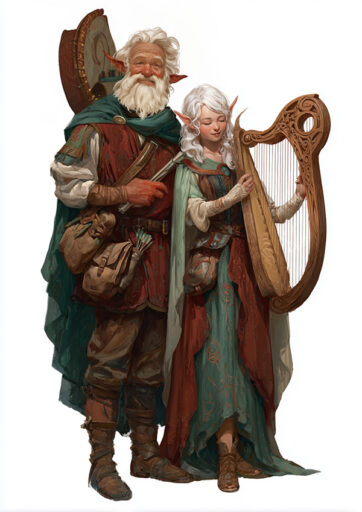
What You’ve Heard of the Moonshae Isles
- The Moonshaes are famous for misty coasts, rugged islands, old kings, and stories in which history, prophecy, and local legend are constantly tripping over each other.
- Bards hear early and often that the isles are culturally split between the land-rooted Ffolk and the seafaring Northlanders, making them rich ground for songs of feud, alliance, conquest, and marriage.
- Even outsiders tend to know the Moonshaes are full of famous tales about corrupted sacred places, heroic rulers, and monstrous threats that left deep marks on local memory.
The People You Understand Best
- Bards tend to understand heralds, skalds, storytellers, musicians, envoys, and anyone whose survival depends partly on memory and partly on reading a room before the room throws something.
- The Northlanders make sense to many bards because they prize boasting, reputation, saga, and public courage; a skald can earn real standing among such people.
- The Ffolk make sense too, though differently: they value lineage, custom, sacred memory, and the stories that bind a people to land and ruler.
Powers, Faiths, or Traditions That Matter to You
- A bard in the Moonshaes pays attention to the Earthmother tradition because it is not just theology; it shapes imagery, ritual, local values, and the emotional grammar of many stories told on the isles.
- Moonwells matter because they are sacred places with enormous symbolic and historical weight, and bards quickly learn that “holy spring in a song” may also be “plot-relevant supernatural location.”
- Bards would also care about the isles’ long tradition of saga, treaty, lament, and praise-song, especially around figures like Tristan Kendrick and the peace between older enemies.
Important Factions, Orders, and Influential Figures
- The Kendrick rulers matter because so much Moonshae history is told through kingship, alliance, and the struggle to unite divided peoples.
- The Harpers are worth a bard’s notice, since they expanded their presence in the isles during the Moonshaes’ struggles against evil.
- Among legendary enemies, Kazgoroth matters most, because it appears not just as a monster in history but as one of those names that warps every story around it toward doom.
Why People Like You Are Needed Here
- The Moonshaes need bards because memory matters here: who ruled, who betrayed, who allied, which promises held, and which stories people still use to understand themselves.
- Bards are especially valuable in a land with divided traditions, because they can move between hall, court, village, shrine, and ship, carrying news and shaping how events are remembered. This is an inference from the isles’ mixed cultures and treaty-driven history.
- In a place full of old legends and active supernatural danger, a bard is often the first to realize that a “local tale” is actually a warning with rhyme attached.
Want more? Reveal optional details your character might know.
Places Your Kind Talks About
- Bards talk about royal seats such as Caer Callidyrr, because courts generate songs, scandals, patronage, and excellent opportunities to be asked to leave politely.
- They also talk about Gwynneth and Myrloch Vale, because those places loom large in the isles’ mythic history and magical atmosphere.
- Sacred places, feasting halls, treaty sites, and battlefields matter especially to bards, since those are the places where stories become memory and memory becomes identity.
Dangers, Enemies, and Bad Omens
- Bards fear more than monsters; they fear stories going wrong: old feuds reopening, sacred places being corrupted, and rulers stepping into roles once occupied by fools, tyrants, or doomed heroes.
- The great dangers of the Moonshaes include raiders, political fracture, supernatural corruption, and enemy powers tied to names like Kazgoroth and Bhaal.
- A bard treats repeated omens, uneasy songs, and local tales that suddenly become specific as signs that trouble is moving from folklore into tonight’s itinerary. This is an inference from how closely Moonshae history tracks its own legends.
Rumors, Sayings, and Half-Truths You’ve Picked Up
- “In the Moonshaes, the old tales are only called legends until they start killing people again.” That is not an official proverb, but it is extremely in the spirit of the place.
- “Every island has its own song, and none of them agree.” That fits a realm shaped by strong local identity and uneasy unity.
- “A Northlander boasts before the deed; a Ffolk sings of it after.” Crude stereotype, obviously, but bards adore a crude stereotype that scans well.