If you are a ranger with knowledge of the Moonshae Isles, you know them as a land of wet forests, rough coasts, lonely roads, and old dangers. The isles are not just politically divided; they are full of borderlands where the wild is strong, the weather is mean, and a person’s ability to track, scout, hunt, and survive can matter more than rank.
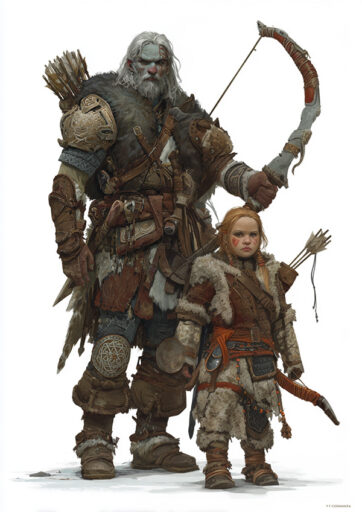
What You’ve Heard of the Moonshae Isles
- The Moonshae Isles are known for rugged terrain, heavy rain, mist, forests, cliffs, and hard travel. Rangers hear of them as a place where the land itself can test you before any enemy does.
- The isles are shaped by old tension between the Ffolk and the Northlanders, with wilderness, coasts, and frontier settlements often caught between those worlds.
- Even outsiders tend to hear of Moonwells, sacred wild places tied to the Earthmother, and of the recurring threats that rise when the land’s balance is disturbed.
The People You Understand Best
- Rangers tend to understand hunters, scouts, foresters, wardens, trappers, fishers, and caravan guides better than courtiers or priests. In the Moonshaes, those people are often essential.
- The Ffolk make sense to a ranger because many of their traditions are tied to the land, the seasons, and respect for places that should not be carelessly despoiled.
- The Northlanders also make sense, though differently: they are seafarers, raiders, and survivors shaped by harsher country, harder travel, and practical strength.
Powers, Faiths, or Traditions That Matter to You
- Even a nonreligious ranger is likely to know of the Earthmother, the primal power tied to the health of the isles and revered especially by the Ffolk and their druids.
- The Balance matters here, whether a ranger uses that exact word or not: when beasts grow strange, forests sicken, or weather turns unnatural, experienced people know something deeper may be wrong.
- Moonwells are sacred places a ranger learns to respect. They are tied to the Earthmother and are treated as signs of the land’s spiritual health.
Important Factions, Orders, and Influential Figures
- The druids of the Earthmother matter to rangers because they guard sacred wild places, watch for corruption, and often know the land better than any mapmaker ever will.
- The rulers of the Kendrick line and the broader effort to unify the isles matter because war, law, and frontier safety all change depending on who can actually hold the land together.
- Among enemies, Kazgoroth is one of the great nightmare-names: a force of corruption and destruction tied to the poisoning of the land’s natural order.
Why People Like You Are Needed Here
- The Moonshaes need rangers because someone must know the trails, the coasts, the weather, the beasts, and the warning signs that trouble is moving through the wild.
- Rangers are valuable wherever settlements stand close to deep forest, storm-beaten shore, monster-haunted hills, or raider-prone waters—which is to say, rather a lot of the Moonshaes.
- In a land where corruption often appears first in lonely places, rangers are often the first to notice that something is wrong.
Want more? Reveal optional details your character might know.
Places Your Kind Talks About
- Rangers talk about forests, highlands, coastal tracks, hidden coves, and rough border country more than courts or cities. In the Moonshaes, those places often matter most.
- Moonwells are places rangers know by reputation, whether as sacred sites, places to avoid disturbing, or signs that druids are watching nearby.
- Dangerous regions such as Moray or contested Northlander territory are exactly the sort of places rangers discuss in practical terms: tracks, ambush points, beasts, tides, and who is likely to kill you first.
Dangers, Enemies, and Bad Omens
- Rangers fear more than bandits and raiders. They watch for blighted beasts, unnatural silence, fouled water, broken migration patterns, and tracks that do not match any healthy creature.
- The great dangers of the Moonshaes include raiders, harsh seas, monster-haunted wilds, and corruption tied to powers like Kazgoroth.
- A ranger treats sudden stillness, fleeing animals, sick forests, or wild places that feel “wrong” as serious omens, not campfire nonsense.
Rumors, Sayings, and Half-Truths You’ve Picked Up
- “On the Moonshaes, the land warns you before it kills you.” That is half wisdom and half superstition, but rangers tend to respect both when the fog gets strange.
- “If the birds go quiet, leave.” Rangers repeat this because in places like the Moonshaes, silence often means something higher on the food chain—or lower in the moral order—is nearby.
- “A Moonwell is safest when you treat it like someone is already there.” That reflects the common sense that sacred places belong to the Earthmother and her guardians, not to wandering meddlers with wet boots.