The Moonshae Isles are home to several distinct peoples, but two human cultures shape most of the islands’ history and daily life: the Ffolk and the Northlanders. The Ffolk are generally seen as the older inhabitants of the isles, with traditions deeply tied to the land, the old faiths, and The Balance of nature. The Northlanders came later, bringing a proud seafaring culture shaped by raiding, exploration, hard weather, and hard-won honor. Across the islands, these two peoples have clashed, traded, intermarried, and influenced one another for generations.
Alongside them are several nonhuman peoples who play an important role in Moonshae history and legend. The most famous are the Llewyrr elves, long associated with the forests of Gwynneth and the hidden realm of Synnoria. Dwarves and halflings are also found in the isles, though in smaller numbers. Firbolgs and eladrin are also counted among the notable peoples of the islands. Together, these cultures give the Moonshaes their distinctive character: ancient, misty, fiercely local, and full of old loyalties.
A note on character creation: Players are not limited to playing a character from one of these groups of people. However, a character from a different species or lineage will have been transplanted from elsewhere in Faerûn and will likely appear anomalous to the Isles’ inhabitants.
Ffolk (build as Human)
The Ffolk are one of the oldest human peoples of the Moonshae Isles and are often seen as the heart of the islands’ older traditions. They are closely associated with the southern isles, ancient kingship, druidic custom, and reverence for the natural world. In many places, the Ffolk live in farming villages, coastal settlements, and hill communities where memory, lineage, and local custom matter greatly. Their stories often emphasize duty to kin, respect for the land, and the belief that nature is alive with sacred meaning.
To outsiders, the Ffolk may seem rustic or old-fashioned, but that would be a foolish misread. Their culture carries deep roots and long memory. They are shaped by old alliances with druids, by reverence for the Earthmother, and by generations of struggle against invasion, corruption, and the harshness of island life. A Ffolk character might know old superstitions, seasonal customs, local lordships, sacred groves, and stories in which the land itself rewards virtue or punishes arrogance.
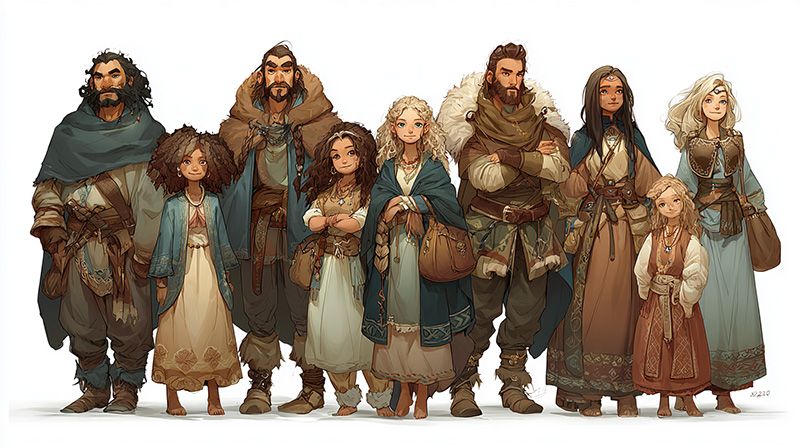
Northlanders (build as Human)
The Northlanders are a proud seafaring human people whose culture was forged by stormy coasts, longships, clan loyalty, and the constant testing of strength and resolve. They are especially associated with the northern isles and with a harder, more martial way of life. In Moonshae history, the Northlanders often appear as raiders, conquerors, traders, and adventurers — but they are more than simple marauders. Their society values courage, reputation, endurance, and the bonds of oath and kin.
Northlander culture tends to feel harsher and more direct than that of the Ffolk, but it also carries its own code of honor. A Northlander may admire strength, but not always cruelty; boldness, but not empty boasting. Over time, many Northlanders have settled, ruled, traded, and built lives in the isles, becoming part of the Moonshaes rather than merely descending upon them from the sea like axe-wielding weather. A Northlander character might know clan traditions, sea routes, longship culture, feud customs, and the importance of proving oneself through deed rather than title.
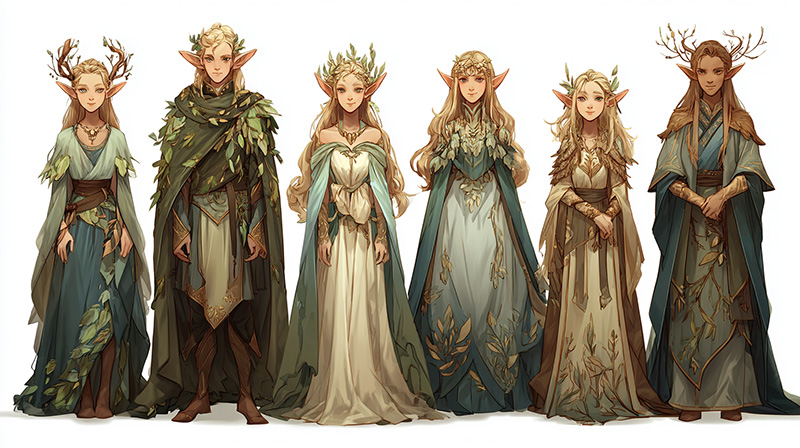
Llewyrr Elves (build as Elf)
The Llewyrr are the elves most closely associated with the Moonshae Isles, especially the great forests of Gwynneth and the hidden, magical realm of Synnoria. They are ancient, secretive, and deeply bound to the natural and mystical life of the islands. To many humans, the Llewyrr feel half like neighbors and half like legends: beautiful, remote, dangerous to offend, and never entirely explainable. Their presence reminds everyone that the Moonshaes are not merely rugged islands, but a place where old magic still lingers in wood, mist, and moonlight.
The Llewyrr are often portrayed as guardians of old places and ancient balances. They are less concerned with human politics than with the long health of the land, the preservation of beauty, and the defense of sacred realms. That does not make them passive. When roused, they can be formidable allies or implacable enemies. A character familiar with the Llewyrr might know of hidden paths, ancient elf realms, old pacts between elves and humans, and the sense that some parts of the Moonshaes are still only loosely connected to the everyday mortal world.
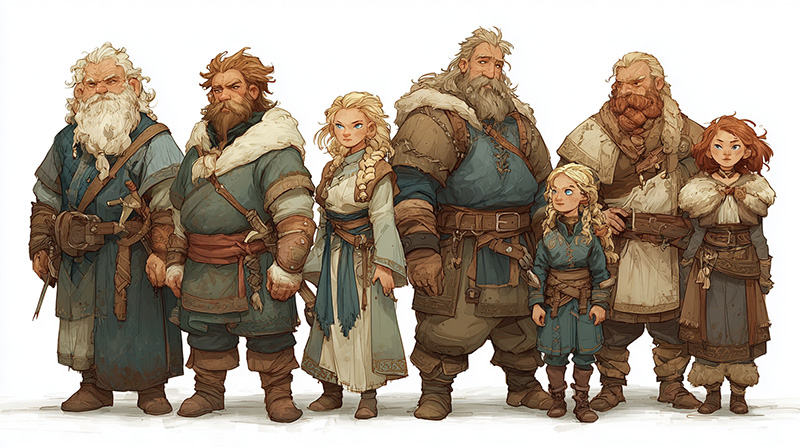
Dwarves
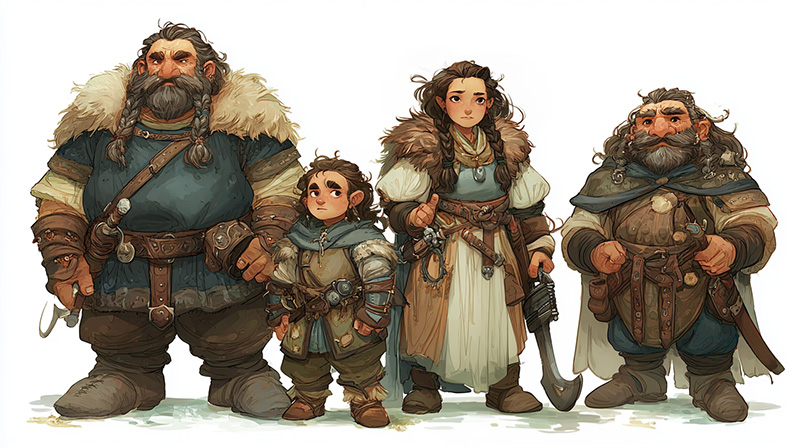
Dwarves are not among the most numerous peoples of the Moonshaes, but they have long had a place in the islands’ history. As elsewhere in the Realms, dwarves are valued for their endurance, craftsmanship, and martial strength. In the Moonshaes, they are often associated with strongholds, stonework, metalcraft, and the kind of practical resilience required to endure a wet, rocky, often unforgiving land. Where the Ffolk preserve memory through story and the Northlanders through saga, dwarves often preserve it through craft, hall, and heirloom.
A dwarf in the Moonshaes may be tied to mining, smithing, mercenary service, or old defensive holds. Though less central to the region’s identity than the Ffolk, Northlanders, or Llewyrr, dwarves provide an important thread in the islands’ social fabric. A character might know dwarves as dependable traders, stern warriors, skilled armorers, or stubborn keepers of old grudges and older obligations. In a place as battered by invasion and wild danger as the Moonshaes, dwarven reliability counts for a great deal.
Halflings
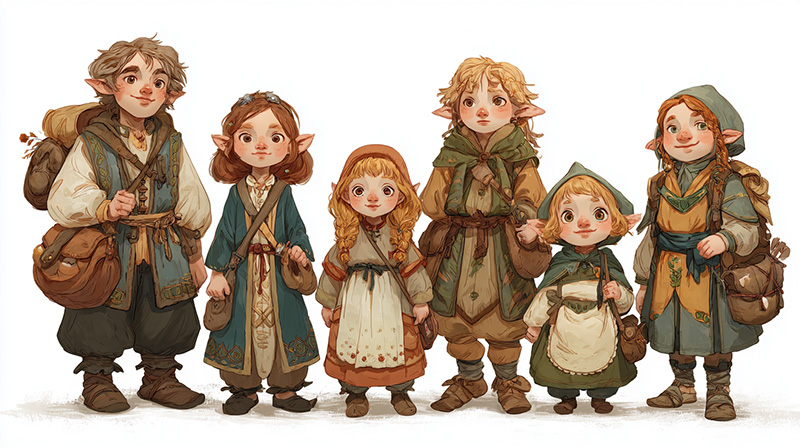
Halflings are present in the Moonshaes, though in smaller numbers and rarely as dominant political powers. They tend to appear as travelers, small-community folk, traders, craftspeople, and adaptable survivors who make homes where larger powers leave room to breathe. In a setting full of kings, raiders, druids, and hidden elf realms, halflings can easily be overlooked — which is often exactly how they prefer it. That does not make them unimportant. Small communities often serve as the social glue of a region, and halflings are well suited to that role.
A halfling in the Moonshaes might be known for hospitality, practicality, quiet cleverness, and a talent for enduring the ambitions of taller fools. They may not dominate the great chronicles of the isles, but they fit naturally into village life, trade networks, and the everyday texture of the region. A character familiar with halflings might know them as excellent neighbors, good hosts, surprisingly stubborn defenders of home, and far less naïve than larger folk sometimes assume.
Firbolgs
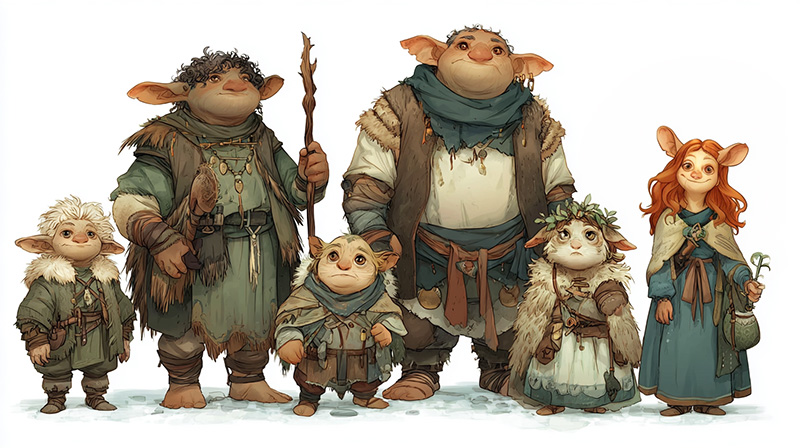
Firbolgs are counted among the notable peoples of the isles. They fit the setting extremely well: large, elusive folk strongly associated with deep forests, old natural power, and a life lived at some remove from crowded settlements and petty politics. In the Moonshaes, firbolgs feel like they belong to the older layer of the world — a people more likely to be encountered at the edge of sacred woods or in places where the land still remembers older names.
Firbolgs are often portrayed as reserved, perceptive, and deeply aware of the rhythms of nature. They are not usually interested in conquest or courtly intrigue, but they may become important protectors, guides, or judges when the natural order is threatened. A character who knows of firbolgs might have heard stories of hidden woodland communities, giantkin wisdom, uncanny strength paired with gentleness, and the sense that some beings in the Moonshaes still live according to laws older than any crown.
Eladrin
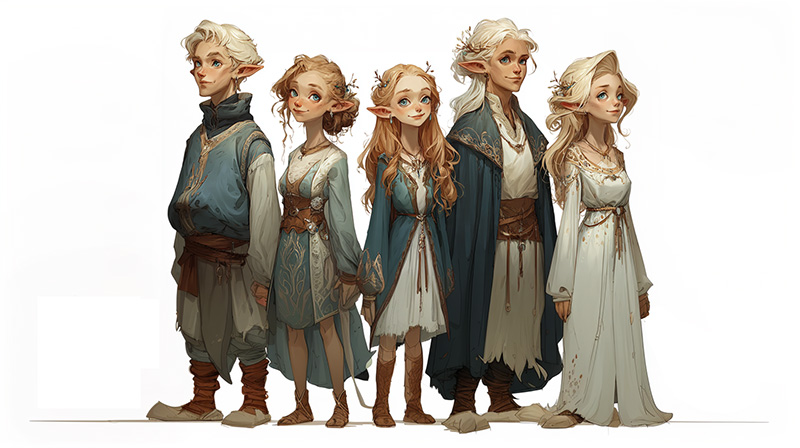
Eladrin presence reinforces one of the Moonshaes’ most interesting qualities: the boundary between the mortal world and more magical realms often feels thin. Eladrin bring with them a strong association with beauty, Fey magic, shifting emotion, and a reality that does not always obey mortal expectations. Where the Llewyrr often embody ancient elven continuity within the isles, eladrin can suggest a stronger connection to the Feywild and to more otherworldly forms of grace and danger.
To most ordinary islanders, eladrin would likely feel rare, uncanny, and a little unnerving — the sort of folk who might speak kindly while still seeming only half anchored to the same world as everyone else. A character who has heard tales of eladrin might associate them with hidden courts, Fey crossings, strange bargains, seasonal magic, and beauty that is never entirely safe to trust.
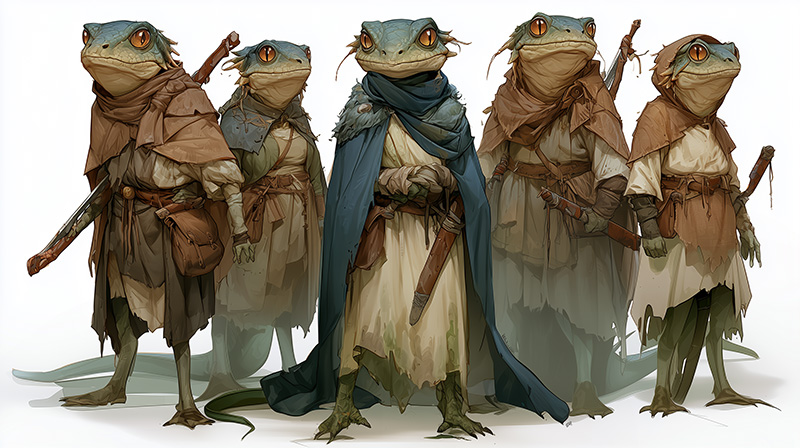
Lizardfolk
The lizardfolk of the Moonshaes are primarily associated with the Breasel Marsh on Moray, where several tribes dwell in a harsh and dangerous wetland shaped by predation, isolation, and the pull of old powers. In the current age of the setting, many of these tribes have become entangled with the Black Blood lycanthropes. What began as conflict between them eventually shifted into alliance when the more cunning leaders on both sides recognized a shared reverence for the same dark power and a common interest in violence, domination, and the reawakening of Kazgoroth. In practical terms, this has made the Breasal Marsh one of the most unstable and threatening regions in the Moonshaes, with savage lizardfolk helping secure the interior of Moray while the Black Bloods focus on Moonwells and the coast.
But the Moonshae lizardfolk are not presented as a single-minded culture. The setting makes a point of distinguishing the bloodthirsty tribes from quieter, more reflective ones who have begun to imagine another future. Some of the less violent tribes in the Breasal Marsh have experienced visions of a life no longer ruled by slaughter, terror, and obedience to their harsher kin. A few have even received divine guidance from Silvanus, suggesting that at least some lizardfolk of Moray stand at the edge of a spiritual and cultural turning point. This divide is echoed directly in the Breasal Scout background, which describes a lizardfolk sect opposed to the alliance with the Black Bloods and committed instead to seeking allies, wisdom, and a better path for their people.